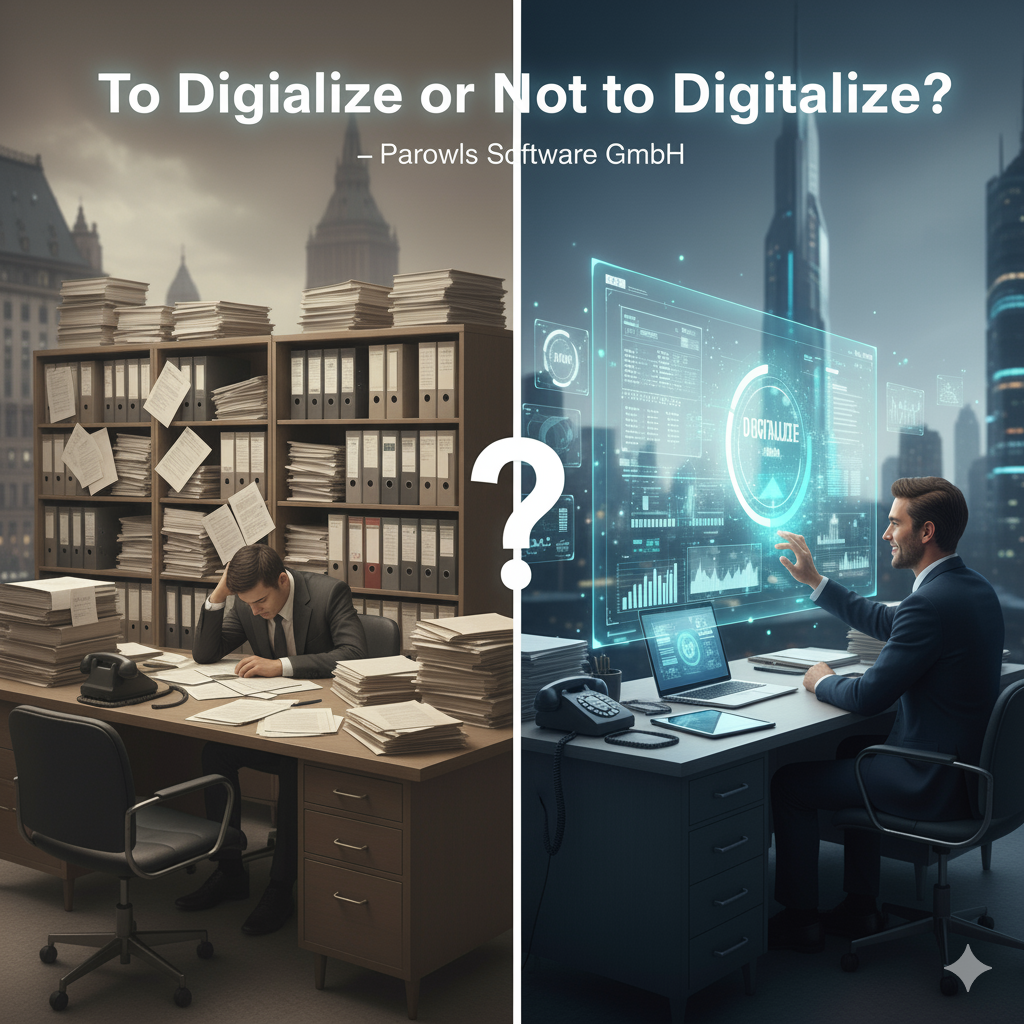
In today’s highly regulated business environment, falsified or manipulated certificates and documents represent a growing operational, compliance, and reputational risk — especially for Swiss MedTech companies and quality-driven KMUs.
Fake or altered documents in supplier qualifications, employee training records, audit documentation, or declarations of conformity can lead to serious consequences during audits, regulatory inspections, and daily operations.
The Rising Threat of Fake Documents in Regulated Industries
While fake academic diplomas often make headlines, the problem is far more widespread and dangerous in corporate and regulated environments. The rapid development of generative AI has made it significantly easier to create highly convincing forgeries of official documents, including stamps, signatures, and layouts.
For Swiss companies working under strict standards like ISO 13485, Swissmedic regulations, and EU MDR, the integrity of documents is not optional — it is a core requirement for maintaining certifications and ensuring patient safety.
Why Document Authenticity Matters in MedTech and Manufacturing
Quality Management and Compliance teams in MedTech and manufacturing routinely manage documents that must remain verifiable and trustworthy for many years, including:
- Supplier certificates and material declarations
- Internal training and qualification records
- CAPA documentation and audit trails
- Declarations of conformity
During surveillance audits and re-certification processes, auditors expect robust, objective proof that these documents are authentic and unchanged. A single questionable document can trigger:
- Extended audits
- Major non-conformities
- Costly corrective actions
- Temporary suspension or loss of certification
In regulated industries, document trust is cumulative — once credibility is questioned, scrutiny increases across the entire system.
Real-World Examples of Document Fraud in Regulated Contexts
Document fraud is not theoretical. Documented cases show how serious the impact can be:
- Counterfeit ISO and EC Certificates: Fake compliance documentation and misleading certificates from unauthorized issuers have routinely slipped into Swiss and European healthcare supply chains. In response, regulators like Swissmedic have issued explicit market warnings regarding counterfeit and non-conforming medical documentation, highlighting how easily organizations can be misled by falsified paperwork.
- Falsified Employee Training Records: Falsified training logs have caused major audit failures, forcing companies to halt production lines and repeat employee qualification processes at significant cost.
- Manipulated Supplier Test Reports: Altered chemical or material testing reports have resulted in costly product recalls, corrective actions, and severe delivery delays for MedTech manufacturers.
- Credential Misrepresentation: Industry research consistently shows that a notable percentage of applicants falsify educational or professional credentials, with the risk being even higher in cross-border supply chains. According to data published in the HireRight Global Benchmark Report, employment and education verifications continue to be the most common areas where candidate background discrepancies are uncovered worldwide.
These cases demonstrate that fake certificates and manipulated documents create real financial exposure, compliance risk, and potential safety implications — particularly in MedTech and manufacturing.
Limitations of Traditional Verification Methods
Most organisations still rely on manual verification methods such as email confirmations, phone calls to issuing organisations, or visual inspection of PDFs or printed documents.
While these approaches once worked, they now face serious limitations:
- Poor scalability with increasing document volumes
- High susceptibility to AI-generated forgeries
- No independent, long-term proof of authenticity
- Significant time burden on Quality and Compliance teams
Even qualified electronic signatures, while essential for contracts, are often too complex and costly to apply to high-volume internal and supplier documentation.
A Practical and Secure Solution for Swiss KMUs
Forward-thinking Swiss organisations are adopting lightweight, cryptographically secure verification methods that complement existing Quality Management Systems without disruption.
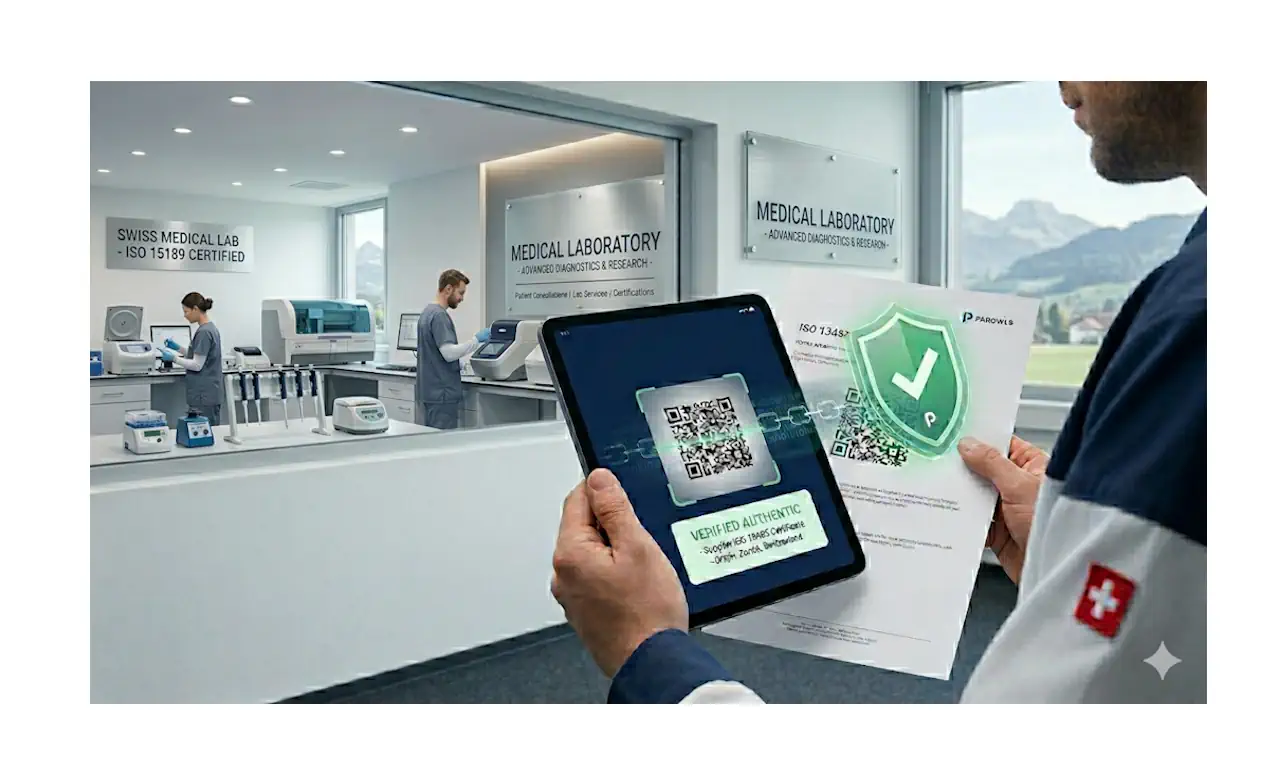
At Parowls, we have developed a pragmatic, privacy-first document verification solution tailored specifically for Swiss MedTech and quality-focused organisations:
- Original documents remain securely in your own systems
- Only a cryptographic hash and minimal metadata are anchored on the blockchain
- Verification via QR code or secure web link
- Fully compliant with Swiss DSG and EU DSGVO
- No cryptocurrencies or tokens involved
- Ready for future Swiss eID integration
This enables independent verification that a document existed at a specific point in time and has not been altered — even years later.
Key Benefits for Quality and Compliance Teams
- Reduced manual verification effort during audits
- Stronger defensibility with auditors and regulators
- Protection against AI-driven document manipulation
- Long-term verifiability beyond system migrations
- Minimal disruption to existing workflows
Take Action to Protect Your Organisation
Document integrity is becoming a competitive advantage in regulated industries. Organisations that implement simple, independent verification mechanisms are better prepared for audits, supplier scrutiny, and future regulatory expectations.
If you are a Quality Manager, Compliance Officer, or Regulatory Affairs professional in the Swiss MedTech or manufacturing sector, we invite you to explore a low-risk pilot project with Parowls.
Start small — with supplier certificates or training records — and experience how straightforward secure verification can be.
Ready to strengthen your document integrity?
Contact us to discuss a tailored pilot.
Parowls — Secure, simple, Swiss-made document verification for real compliance needs.