Modern societies are experiencing a quiet but profound erosion of trust. Trust in institutions, in records, in data, and often in each other. This is not primarily a crisis of values, but a crisis of verification. When facts themselves become disputed, coordination breaks down.
Blockchain technology is often positioned as a financial innovation or a speculative tool. But its more durable contribution may lie elsewhere: in its ability to create consensus without requiring agreement — a subtle but powerful shift in how trust can be rebuilt in complex systems.
This article explores what blockchain consensus really is, why it matters for societal trust, and how it enables alignment even when people disagree.
What: Consensus Without Shared Belief
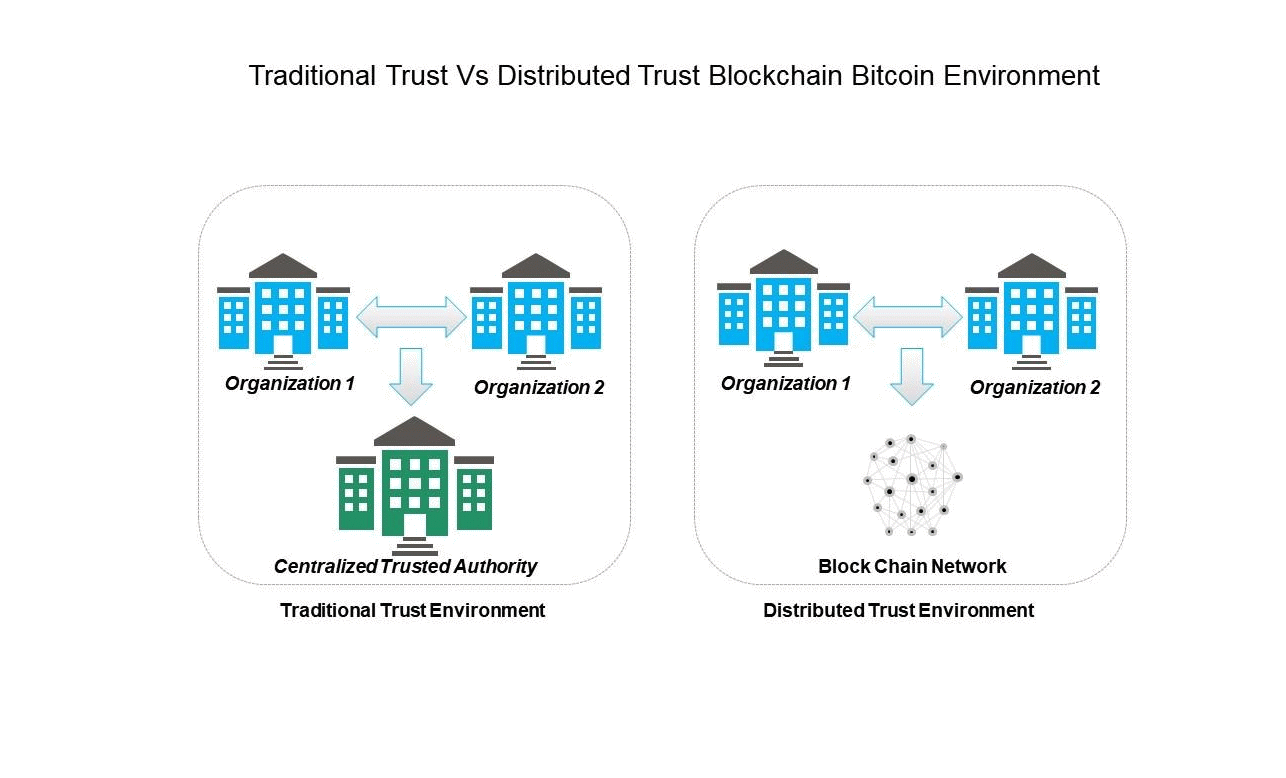
In traditional systems, trust depends on authority. Institutions, notaries, registries, auditors, and courts certify what is true. For the system to function, participants must broadly agree on who to trust and whose records are legitimate.
Blockchain changes this model.
A blockchain is a distributed ledger where records are validated collectively, using predefined rules and cryptographic verification. Once information is recorded, it cannot be altered without detection. The result is a shared, tamper-evident history that all participants can independently verify.
Crucially, blockchain does not require participants to trust one another — or even to share the same motivations or worldviews. Instead, it requires agreement on:
- the rules of validation
- the governance model
- the evidence produced
Participants may disagree on intent, fairness, or interpretation. But they converge on outcomes because disputing verifiable records is futile.
In other words, blockchain does not create consensus in belief. It creates consensus on facts.
Why: Trust Breaks Down When Facts Do
Many of today’s societal tensions stem from contested records rather than incompatible values. Disputes over ownership, compliance, provenance, identity, or accountability often arise because data is fragmented, opaque, or manipulable.
When systems rely on siloed databases and manual reconciliation:
- errors multiply
- audits become expensive
- disputes escalate
- trust erodes
Blockchain addresses this problem by narrowing the surface of disagreement. Instead of arguing over which record is correct, participants rely on a single, verifiable source of truth.
This shift is particularly relevant in environments where:
- multiple parties have competing incentives
- trust between actors is low
- regulatory requirements are high
Switzerland’s governance culture — precision, reliability, and procedural trust — aligns naturally with this approach. Here, trust has always been built on rules and verification, not blind faith. Blockchain extends that logic into the digital realm.
How: From Agreement to Alignment Through Verification
The key distinction is between agreement and alignment.
Traditional systems require agreement:
- on institutions
- on authority
- on intermediaries
Blockchain systems require alignment:
- on rules
- on evidence
- on outcomes
This alignment is enforced through verification.
Practical examples
Land registries
Buyers, sellers, banks, and notaries may not trust one another. Yet when a property transfer is recorded on a blockchain-anchored registry, all parties accept the result. The record is timestamped, immutable, and auditable.
Compliance and audit trails
Organisations and regulators often spend enormous effort reconciling reports. Blockchain-anchored logs allow both sides to verify integrity independently, reducing friction without reducing oversight.
Supply-chain provenance
In pharmaceuticals or luxury goods, manufacturers, logistics providers, and regulators may operate across jurisdictions. Blockchain enables shared verification of origin and handling, even when commercial interests diverge.
In each case, consensus emerges not from goodwill, but from cryptographic certainty.
The Limits — and the Strength — of Blockchain Consensus
Blockchain is not a solution to political disagreement or moral conflict. It cannot reconcile values. What it can do is ensure that discussions are grounded in shared facts.
This is its strength.
By reducing ambiguity, blockchain allows institutions and societies to focus energy on decisions rather than disputes over data. It creates a neutral trust layer that supports cooperation without requiring unanimity.
The most effective blockchain systems are often invisible. Citizens do not need to understand consensus algorithms to trust a digital certificate. They simply need confidence that the system works.
Conclusion: Restoring Trust by Reducing What We Must Agree On
Trust at scale does not require shared beliefs. It requires shared verification.
Blockchain enables societies to function even when trust is fragile, by narrowing agreement to rules and evidence. In doing so, it offers a pragmatic path to restoring confidence in records, processes, and institutions.
In an increasingly complex world, this may be one of blockchain’s most important — and least understood — contributions.
The question is no longer whether people can agree on everything.
It is whether systems can help us agree on what actually happened.